Lightweight cellular concrete
Cellular concrete mixes designed around project-specific density, placement, curing, and performance requirements.
Applications
Explore how licensed foaming-agent formulations, generator equipment, lightweight cellular concrete, and SIP formwork can be combined for different production and building needs.

Cellular concrete mixes designed around project-specific density, placement, curing, and performance requirements.
Coordinate on-site casting methodology with foaming technology, mix preparation, and Stay-In-Place (SIP) formwork.
Explore Casting a House →Establish manufacturing and commissioning workflows for foaming generators and related production equipment.
Explore Technology Transfer →Use stay-in-place formwork as part of an integrated construction system for suitable project designs.
Explore SIP Formwork →Integrated Solutions
LCM technology transfer can support production planning across concrete materials, equipment, and building systems. Select an area to explore the locally documented scope.
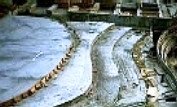
Plan foam generation, controlled casting, and production trials around local materials and project requirements.
Placement records document the casting method and delivery route, with fresh density and handling limits verified at the point of use.
Explore cellular concrete →
Coordinate formulation licensing, generator manufacturing, and casting methodology in one project-specific system.
The photograph shows the building-envelope context only; panel design and connections require project-specific engineering.
Explore building systems →
Develop a transferable process with local manufacturing setup, operator training, and agreed quality checks.
Equipment selection follows the intended output and local utilities, with settings and performance confirmed through commissioning measurements.
Review the advantages →Foaming-Agent Applications
The agent, dilution water, foam generator, cementitious mix, and placement method form one process. Establish project-specific acceptance criteria and verify them with repeatable trials using the intended materials and equipment.
Prepare the concentrate using the current supplier instructions and clean, suitable water. Confirm dilution by measured quantity, then record batch identity, water conditions, and actual concentrate consumption.
Foam stability and bubble distribution affect handling and the resulting cellular matrix, but appearance alone cannot establish hardened performance. Check drainage, density, mixing response, and representative cured specimens against the project's test plan.
Cement type, sand grading, water chemistry, admixtures, mixing energy, and sequence can change foam response. Test the proposed combination before production and adjust only within a documented mix-design and quality-control process.
Dilution ratio is formulation- and process-specific; use the technical data as an initial guide, then verify foam properties and concrete yield through trials. Calculate cost per cubic metre from measured concentrate use, actual production yield, water and material costs, losses, and local pricing rather than a generic ratio.
Cellular concrete may be considered where lower density and an air-cell matrix support thermal or acoustic design objectives. Quantified values depend on density, thickness, moisture, workmanship, and the full assembly; use test evidence and project engineering before making performance claims.
Discuss your materials, manufacturing objectives, and construction requirements.
Contact the TeamTechnical Process
Every project is scoped around the same inputs: intended use, target output, local material sources, available utilities and acceptance criteria. Formulation, foam generation, mixing, transfer, placement and inspection are planned as one workflow, not as separate operations.
No dilution ratio or cement-to-sand ratio can be fixed in advance. The recipe is established from product data, the mix design and the materials on site, then qualified through trial mixes before production release. A generator delivers steady foam only inside its verified operating envelope, with output matched to mixing and placement; capacity, pressure and flow are confirmed with equipment data and commissioning measurements. Pump and hose performance follow the mix, the route, the lift and the rate of placement.
Foam density, fresh concrete density, workability, material consumption and interruptions are recorded on a repeatable sampling plan. Placed material is protected, and curing, demoulding, loading and follow-on trades follow approved project criteria and strength evidence; curing time varies with formulation, geometry, temperature and humidity. In SIP assemblies the formwork is never removed, so the wall arrives already formed and insulated, with any insulation or cladding contribution designed and verified for that assembly.
Select the application
Define geometry, target performance, production scale, local materials, and casting or moulding method.
Validate mix and delivery
Measure dilution and mix proportions in trials; check fresh density and transfer stability using intended equipment.
Inspect each stage
Document formwork readiness, placement sequence, surface condition, curing protection, and application-specific acceptance checks.